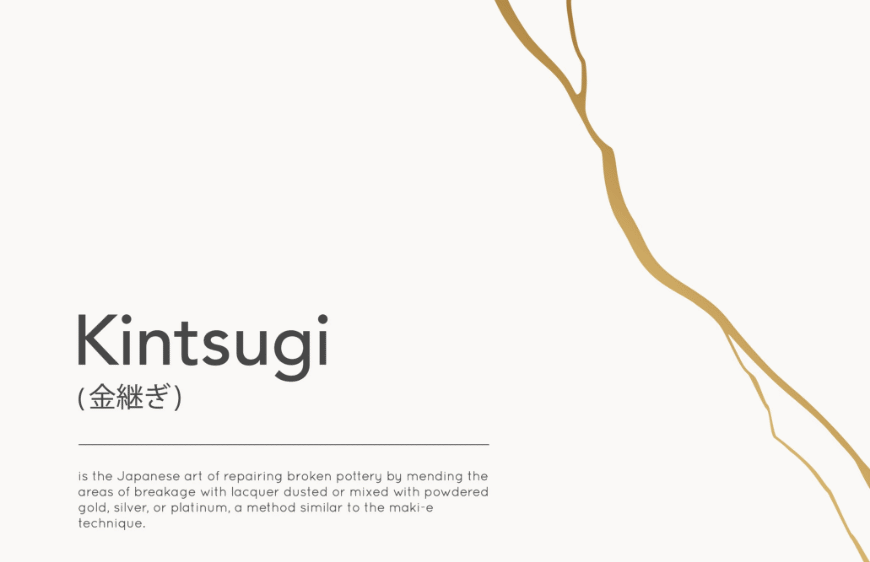
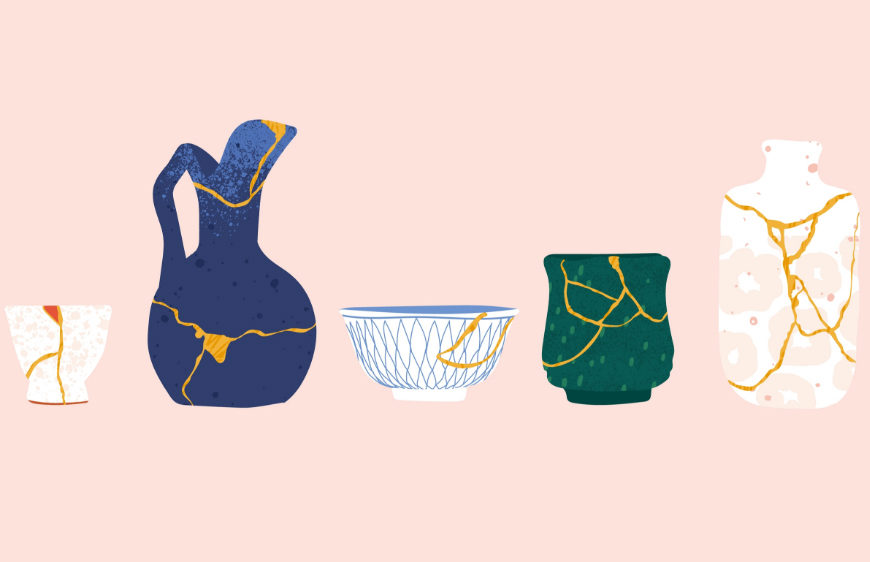
The story begins in Japan. When his favourite ceramic piece broke, the military ruler Ashikaga Shogun Yoshimasa wanted to have it repaired. He took the broken object to China so that its pieces could be joined together again. But when it returned, the result was disappointing: the fragments had been held together with crude metal fittings. He asked whether it could be restored more beautifully, in a way closer to its original appearance. In the 15th century, Japanese artists responded to this need with Kintsugi.Where does the name come from? Often translated as golden joinery or golden repair, it combines two Japanese words: kin, meaning gold, and tsugi, meaning to join. The use of gold also underlines the object's continuing value. Kintsugi suggests that something broken or damaged can become even more valuable than before, offering a perspective that can reach into every part of our lives.

Kintsugi: A Sustainable Japanese Philosophy
With each passing day, we consume faster, lose interest sooner and find it harder to concentrate. Our dwindling attention and the drive to consume seem to go hand in hand. Through ceramics, Kintsugi offers a constructive response to an age of rapid consumption and the constant pursuit of the best. Challenging the ideal of perfection, this philosophy finds renewal at the point of breakage, with an outlook that is both sustainable and hopeful. Here, we explore the details of this increasingly popular philosophy of repair.
Challenging perfection through Kintsugi
Kintsugi celebrates the beauty within brokenness. It gives an object another chance and represents the possibility of beginning again with greater motivation. The aim is not to make a vase look brand new, but to let its repaired cracks shine.The technique can use silver or platinum as well as gold. These luminous materials highlight the break rather than conceal it, allowing the object to express itself through its imperfections. This thoughtful philosophy can also be seen as an approach to personal growth, encouraging us to love ourselves with our imperfections and feel content with who we are.


Believing in renewal
In a culture of constant consumption, where we pursue new things and objects seem to grow old ever more quickly in our minds, Kintsugi offers a wise, traditional response to a fast-moving age. It invites us to recognise the care and craftsmanship involved in repair: the perfection within imperfection and the depth within something old.Kintsugi's response to the pursuit of perfection is also said to draw on another Japanese philosophy, wabi-sabi. Embracing imperfection, wabi-sabi becomes a way of life through Kintsugi, pointing towards stillness and meaningful coincidence.
The spiritual dimension of a 500-year-old philosophy
By highlighting renewal with precious metals, Kintsugi also connects with sustainability and a greater respect for the planet. In a world shaped by technology, where we consume quickly, move our attention elsewhere and continually search for something new, it invites us to pause and look again. It encourages us to resist taking more than we need and reminds us that, whatever the circumstances, our strength lies within. And that every day offers the possibility of a fresh start.The philosophy's connection with ceramics adds another layer of meaning. Drawn from nature, shaped by human hands and brought to life through earth, ceramic material never truly leaves us. Its capacity for renewal, transformation and development gains further depth through the spirit of Kintsugi.
A reflection from the craftspeople of Kintsugi
“Kintsugi does not repair the beauty in a broken object. That beauty gains meaning through the way you look at it. Kintsugi means seeing strength in what is broken and giving it a new chance at life instead of throwing it away.”Accepting objects as they are, with their cracks and signs of age, Kintsugi embraces a sense of completeness and wholeness. A vase, a sculpture or a plate can remind us that this is never the end of the road. It skilfully combines the courage to begin again with an even greater smile with the earth's enduring energy of movement and creation. There is much to learn from Kintsugi, which can now be explored through enjoyable workshops in ceramic studios.